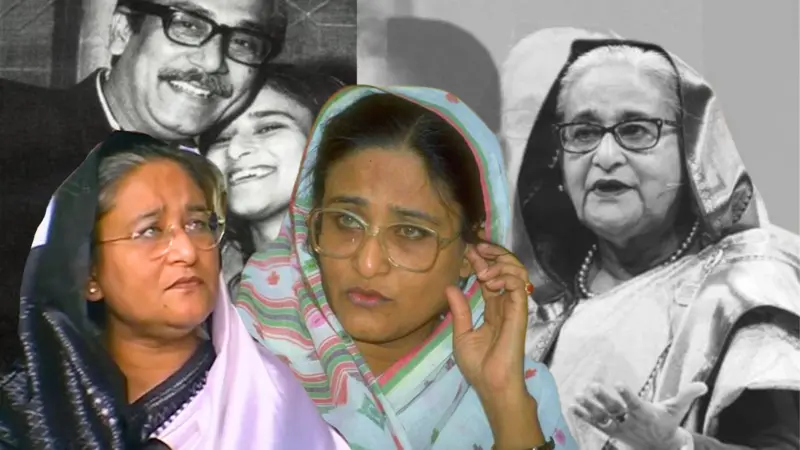
Sheikh Hasina, who once led Bangladesh from exile in India, has again found herself beyond the country’s borders as history takes a dramatic turn. India was the place where she first learned she had been elected the president of the Awami League. And now, from India once again, she has learned that her party’s activities have been banned — and that she has been sentenced to death in absentia on charges of crimes against humanity.
For nearly 45 years, Sheikh Hasina has been one of the most defining and dominant figures in Bangladesh’s political landscape. Analysts say it is almost impossible to tell the story of Bangladesh’s modern politics without mentioning her name.
At age 76, she holds a singular place in history: the world’s longest continuously serving female head of government. Yet her political journey — from party leader to opposition voice, and three-time prime minister — has always been marked by intense struggle, resilience, and controversy.
“For four and a half decades, she has been central to Bangladesh’s political theatre,” said political analyst Mohiuddin Ahmed. “No conversation about Bangladesh’s politics can honestly avoid her.”
But critics argue that the very decisions she made during her most recent period in power led to the downfall of her party. They accuse the Awami League — the party she led for 44 years — of becoming increasingly authoritarian, shutting down dissent, and centralizing control. Opposition groups are now calling not just for a ban on activities, but for a complete prohibition of the party itself.
The story of Sheikh Hasina is inseparable from the trauma of August 15, 1975 — the day her father, Sheikh Mujibur Rahman, Bangladesh’s founding president, was assassinated alongside most of their family. She and her sister Sheikh Rehana survived only because they were abroad.
In the years that followed, the Awami League was weakened, fractured, and politically cornered. Under the military government in 1976, the party re-registered and struggled to regain visibility.
Leadership disputes soon followed. It was senior figures — including Abdur Razzaq, Dr. Kamal Hossain, and Zohra Tajuddin — who eventually decided that the party needed a unifying figure.
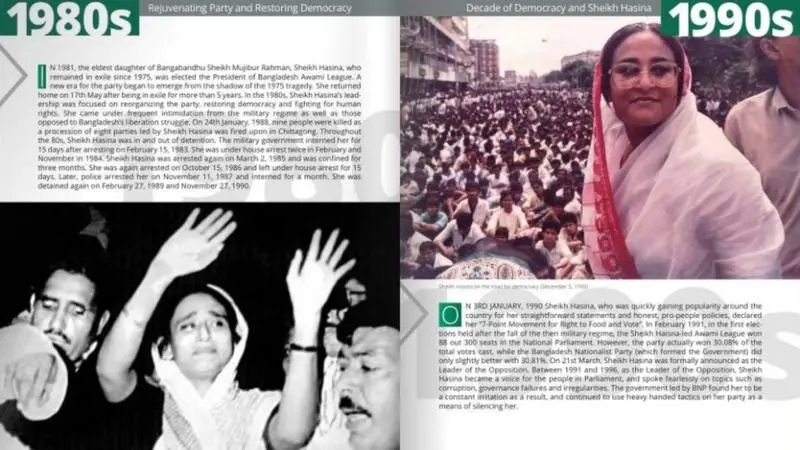
They chose Sheikh Hasina. From exile in India, she was elected president of the Awami League in 1981 — before she could even return home. When she finally did, she emerged as a powerful voice against military rule, throwing herself into the pro-democracy movement that reshaped Bangladesh.
For decades, Sheikh Hasina stood at the center of Bangladesh’s political narrative — as survivor, challenger, and prime minister. She returned her party to power, presided over economic growth, and claimed credit for infrastructure and development gains.
But critics argue this came at the cost of shrinking democratic space, the jailing of opponents, and controversial elections. Now, her party is banned. Her legacy is under trial — both legally and politically.
And once again, Sheikh Hasina is in India. Not as a rising leader in exile — but as a former leader facing one of the most dramatic reversals in South Asian political history.